The Truth About the Macbook Air M5: Pros, Cons, and Verdict
Introduction
The MacBook Air M5 arrives in a market where expectations are high for thin-and-light laptops that blend performance, battery life, and portability. For many buyers, the Air represents the balance between daily productivity and mobility: a device that should be fast enough for everyday creative work, quiet enough to use in meetings and classrooms, and light enough to carry all day. This article examines the MacBook Air M5 from the perspective of typical buyers—students, professionals, content creators, and travelers—and evaluates its strengths and limitations in real-world use.
Detailed Product Review and Analysis
Design and Build
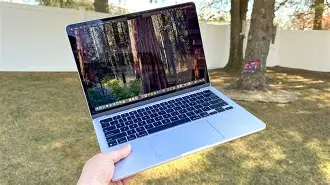
The MacBook Air M5 continues the Air tradition of a refined, minimalist chassis. The unibody aluminum construction keeps the laptop sturdy while remaining lightweight, and the tapered profile contributes to the Air's signature portability. For daily commuters and students, the M5's compact footprint translates to less strain when carried in backpacks or briefcases. The hinge provides a stable typing angle without excessive wobble, and the overall fit-and-finish aligns with expectations for a premium laptop.
Display and Media
The Air's display is one of the most visible aspects to end users. The M5 offers a bright, color-accurate panel suitable for web browsing, streaming, and photo editing at an amateur-to-semi-professional level. The high pixel density makes text crisp and scaling comfortable for multi-window workflows. For buyers who care about color-critical work—photographers and designers—the Air is capable, but a calibrated external monitor may still be desirable for heavy photo retouching or color grading.
Performance: Real-World Use
Apple silicon generational upgrades tend to bring improved CPU and GPU efficiency, and the M5 follows that pattern by delivering snappier responsiveness across everyday tasks. In practical terms, the M5 accelerates common workflows: launching applications is nearly instantaneous, multitasking between dozens of browser tabs and office apps feels fluid, and light-to-moderate media editing (photo batches, short video edits, and encode/export tasks) completes faster than previous mainstream ultrabooks.
Developers working with local builds, virtual machines, or containers will find the M5 well-suited for lightweight coding work and local app testing. For heavier compile jobs or large parallel builds, a more powerful machine with greater sustained thermal headroom remains preferable.
Battery Life and Portability
Battery life is often a decisive factor for buyers who spend long hours away from power. The M5 shines in daily mixed-use scenarios—document editing, video conferencing, streaming, and light content creation—with batteries that typically last through a full workday for many users. The combination of energy-efficient silicon and macOS power management yields practical endurance rather than marketing-hour extremes.
Thermals and Noise
The MacBook Air series traditionally prioritizes silence and efficiency. The M5 continues to favor passive or low-noise cooling in everyday scenarios, keeping fans quiet during web browsing and video playback. Under sustained heavy loads (long export tasks, extended code compilation, or prolonged gaming), thermal throttling is perceptible—performance tapers to keep temperatures in check. Buyers who expect desktop-class sustained performance should consider models with active cooling and larger thermal envelopes.
Ports, Connectivity, and Expandability
Port selection remains a common complaint among ultraportable buyers. The Air M5 offers a modest selection of high-speed USB-C/Thunderbolt ports that support charging and external displays, along with a headphone jack. This configuration is enough for many mobile workflows, but photographers and videographers who rely on SD cards or multiple legacy USB-A devices will need dongles or a hub. For users who prefer a clutter-free desk setup, a single compact dock can provide the necessary additional ports.
Find top-rated Laptops & Computers products at great prices.
See Deals →Speakers, Camera, and Microphone
Improvements in media components matter for meetings and content creation. The M5's speakers are capable for video calls and casual media consumption, delivering clear mids and reasonably full sound for its size. The webcam and microphones are adequate for remote work, though creators demanding the highest possible webcam fidelity will still benefit from an external camera and microphone for polished streaming or recording.
Software, Compatibility, and Ecosystem
macOS remains a cornerstone of the Air's appeal. Buyers gain access to a cohesive ecosystem—continuity features with other Apple devices, long-term software updates, and optimized native apps. Application compatibility, especially after Apple silicon's transition, is broad: most mainstream creative and productivity apps run natively or perform well under translation layers. For specialized Windows-only software, virtualization solutions and cloud services are common workarounds, though they may not match native performance in every scenario.
Storage and Memory Considerations
Storage and RAM configurations influence the machine's longevity. Because Apple soldered memory and storage are not user-upgradable, buyers should choose configurations that match their projected needs for several years. Photographers, video editors, and users who handle large media libraries should prioritize higher-capacity SSDs, while users who maintain large multitasking workloads should consider increased RAM to avoid swapping that affects performance.
Repairability and Sustainability
The MacBook Air M5 continues the trend of compact integration, which benefits mobility but reduces serviceability. Repairs such as battery and display replacement are supported through authorized channels, but DIY upgrades are limited. Prospective buyers who value repairability and long-term independent servicing should weigh that against the device's longevity, dealer support, and Apple's trade-in and refurbishment programs.
Real-World Use Cases
- Students: The M5 is well-suited for note-taking, research, video calls, and light media projects. Its portability and battery life make it a reliable campus companion.
- Office Professionals: For document-heavy work, email, spreadsheets, and remote meetings, the M5 provides a smooth experience with minimal distraction from fan noise and robust battery life.
- Creatives on the Go: Freelance photographers and content creators who do short edits and client previews can rely on the M5 for on-the-spot work; however, intensive timelines or prolonged render-heavy projects may benefit from a desktop or higher-end mobile workstation.
Shop the latest Laptops & Computers picks on Amazon.
Browse Now →- Developers: Many developers will appreciate the fast single-core responsiveness and the efficiency of the platform. Those needing to run many simultaneous containers, heavy local VMs, or very large codebase builds may find developer-focused laptops with additional cores and greater cooling preferable.
- Travelers: The M5's weight and battery typically make it a strong travel choice—ideal for writers, business travelers, and digital nomads who prioritize mobility.
Pros & Cons
- Pros:
- Lightweight, premium build that suits daily mobility and commuting.
- Strong single-threaded responsiveness and excellent real-world snappiness.
- Long battery life in mixed-use scenarios.
- Quiet operation for most everyday tasks.
- Tight integration with macOS and the broader Apple ecosystem.
- Cons:
- Limited port selection necessitates dongles or hubs for many workflows.
- Repairability and upgrade options are limited—RAM and storage are fixed at purchase.
- Thermal throttling can reduce sustained performance during prolonged heavy workloads.
- Price can be high at upper configurations relative to Windows ultraportables offering similar raw specs.
How the MacBook Air M5 Compares
For readers evaluating the Air M5 against older Air models and competing ultraportables, the table below highlights core practical differences most buyers care about. The descriptions are qualitative and focused on everyday outcomes rather than raw benchmark numbers.
| Category | MacBook Air M5 | Previous MacBook Air (M2) | Typical Windows Ultraportable (e.g., XPS, ThinkPad X1) |
|---|---|---|---|
| Everyday Performance | Improved responsiveness and faster app launches | Very capable for daily tasks | Comparable, varies by CPU generation |
| Sustained Heavy Workloads | Good, but may throttle under long, intensive jobs | Similar limitations under sustained load | Often better when configured with higher-TDP CPUs and stronger cooling |
| Battery Life | Excellent in mixed-use, full-day scenarios | Very good | Varies widely; high-efficiency models can be competitive |
| Port Selection | Minimal—USB-C/Thunderbolt and headphone jack | Similar | Often more variety (USB-A, HDMI, SD) depending on model |
| Software Ecosystem | macOS advantages: continuity, native apps, frequent updates | Same | Windows ecosystem: broader legacy app compatibility |
| Price-to-Value | Premium pricing for build/experience; value depends on configuration and needs | Often similar at launch pricing | Windows rivals may offer more configurability at similar price points |
Buying Guide: Who Should Consider the MacBook Air M5?
Deciding Factors
When deciding whether the MacBook Air M5 is the right choice, buyers should consider their primary tasks, mobility needs, and long-term expectations.
- Primary Use: For web-based work, office productivity, video calls, and light creative tasks, the M5 is an excellent fit. For extended-heavy content creation or engineering workloads, consider a higher-performance MacBook Pro model or a Windows workstation with active cooling.
- Portability vs Expandability: If the priority is a lightweight laptop, accept the trade-off of limited ports and non-upgradable internals. If a versatile on-desk port selection without adapters is essential, budget for a hub or choose a machine with native ports.
- Longevity and Specs: Because RAM and internal storage are fixed at purchase, select a configuration that will serve needs for at least three to five years. Prioritize RAM for heavy multitasking and storage for large media libraries.
- Budget Constraints: Higher storage and RAM options increase the cost significantly. Balance the initial price with expected resale value and productivity gains.
Recommended Configurations by User Type
- Students and General Users: Base-to-mid storage with standard RAM suits note-taking, research, and media consumption. Prioritize battery life and portability over top-end specs.
- Traveling Professionals: Mid-tier RAM and a moderate SSD size are wise—enough space for documents and essential apps, with the option to use cloud storage for archives.
- Creative Hobbyists: Larger SSD and extra RAM help with photo libraries and non-linear video editing. Consider an external monitor and a fast backup solution.
- Power Users and Pros: If work involves heavy video editing, 3D rendering, or large-scale native compiling, evaluate MacBook Pro alternatives with sustained-performance designs.
Accessories and Practical Tips
- Buy a compact USB-C hub if workflows require SD cards, Ethernet, or multiple USB-A devices.
- Consider AppleCare or equivalent extended coverage if accidental damage protection and longer hardware support are priorities.
- Invest in a quality external drive or cloud backup strategy—internal SSD capacity can be costly at higher tiers.
- For frequent video conferencing, a small external webcam and microphone can improve production value beyond the built-in components.
Verdict and Conclusion
The MacBook Air M5 is a compelling choice for buyers who prioritize portability, battery life, and a polished user experience. It advances the Air lineage with improved responsiveness and a refined balance between performance and efficiency, which suits the needs of students, frequent travelers, office professionals, and creative hobbyists. However, buyers whose workloads demand sustained high-performance under prolonged heavy loads should consider machines with larger thermal designs or higher-tier models in the same ecosystem.
Ultimately, the Air M5 excels as a daily driver: it is quiet, capable, and comfortable for the majority of everyday computing tasks. The trade-offs—limited ports, fixed internal specifications, and thermal constraints under sustained loads—are the usual compromises for a thin-and-light laptop, and they should be weighed against personal workflows and priorities. For those who value mobility and a seamless macOS experience, the MacBook Air M5 is a strong contender; for those whose work requires peak sustained throughput or extensive internal expandability, a different class of laptop may be the better long-term investment.