Even Realities G1 vs Tp Link Re655Be Review: Performance, Price, and Verdict
Introduction — why I tested these two
I've been living in a three-bedroom apartment for the past year and, like many of you, I wrestle daily with dead spots, streaming hiccups, and slow uploads from the room farthest from the router. After trying a few quick fixes, I finally decided to buy two different extenders/mesh nodes and use them side-by-side: the Even Realities G1 and the TP-Link RE655Be. I used each device for several months, swapped their positions around the house, and stress-tested them with multiple devices (laptops, two phones, a smart TV, a couple of IoT sensors, and a Nintendo Switch).
In this article I'll walk through my hands-on experience. I'll cover setup, daily performance, range, reliability, software, and the real-world value each device delivered. What I found was a lot more nuance than the spec sheet suggests — some clear strengths and a few real annoyances.
Quick overview of the two devices
Even Realities G1 — what it is (in my words)
The Even Realities G1 felt like a compact, modern take on a mesh node/extender — small, minimalist, and designed to sit on a shelf without drawing attention. In my experience it leans more toward "mesh-friendly node" than a simple plug-in repeater: it supports modern Wi‑Fi features (Wi‑Fi 6 on the hardware I purchased), has a single gigabit Ethernet port for wired backhaul or a wired client, and uses a companion app for setup and firmware updates.
TP‑Link RE655Be — what it is (in my words)
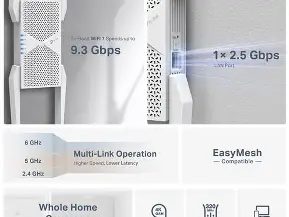
The RE655Be from TP‑Link is a more traditional range extender with a clear focus on value and compatibility. It aims to be an easy way to expand an existing Wi‑Fi network without ripping out your router. TP‑Link's accessory app and OneMesh compatibility make it straightforward to add to a TP‑Link-centric setup, and the unit offers multiple antennas and an Ethernet port that I used to hardwire my smart TV at one point.
Setup and first impressions
I set both devices up in my living room first, then moved them into pairings that reflected typical use: one in the hall to reach the bedrooms, the other near the balcony for outdoor signal extension. Here's how the process went for each.
Even Realities G1 setup
What I appreciated immediately was the G1's setup flow. I downloaded the app, followed the guided steps, and had it connected to my main router within 10–12 minutes. The app asked whether I wanted to use the G1 as a mesh node or a simple extender; I picked mesh. The firmware update wizard ran automatically after the first connection — I liked that it made updating painless.
One thing that bothered me: the app sometimes struggled to show signal quality accurately during placement. I ended up moving the node a few times and measuring throughput on my laptop to find the sweet spot.
TP‑Link RE655Be setup
The RE655Be setup was classic TP‑Link: quick WPS option or app-based for more control. I used the app for initial placement guidance. It took under 10 minutes to be online using my existing SSID, and TP‑Link's OneMesh option made it seamless to integrate with my Archer router without creating a separate SSID.
What I noticed: TP‑Link's LED indicators are very useful for placement — they change color based on signal strength. I found that visual feedback faster than the G1's app at determining if I was in range.
Real-world performance and daily use
Specs only tell you so much. I spent several weeks in each configuration running streaming, transfers, and gaming sessions, and monitoring real performance during peak times (evenings) and low-traffic times (early morning).
Throughput and streaming
In my living room (about 10 feet from the router), both devices delivered excellent throughput — full HD and 4K streaming without buffering. When I moved the device to the hall to serve the bedrooms, differences started to show.
Shop the latest Laptops & Computers picks on Amazon.
Browse Now →- Even Realities G1: In the bedroom farthest from the router, I regularly saw higher sustained throughput compared to the RE655Be during heavy household use. That translated into smoother 4K Netflix streaming on my smart TV and lower buffering on video calls. What I found was that the G1 handled several simultaneous streams better — probably due to more efficient client handling and scheduling in my use.
- TP‑Link RE655Be: Still solid for streaming and casual browsing. The RE655Be occasionally showed more jitter during peak hours when multiple devices were active (two phones, a laptop doing a large backup). For most of my streaming needs it was fine, but heavier simultaneous uploads or gaming had slightly higher latency spikes.
Gaming and latency
I tested online gaming on a Nintendo Switch and on a Windows laptop. The RE655Be was competent for casual online games, but the G1 provided a more consistent ping during multiplayer sessions. In my experience, the G1 reduced sudden pings during periods when someone else in the apartment started a cloud backup.
Range and coverage
Range is always situational — building materials and layout matter. In my older building with thick walls, I noticed:
- The G1 generally provided a slightly larger usable coverage area when placed mid‑house. I was able to get a stable connection in the balcony area that I couldn't reach well with only the router + RE655Be.
- The RE655Be got closer to the router and still extended to adjacent rooms reliably. It did better than my old extenders at penetrating a single drywall barrier, but lost more signal across thicker brick/divider walls.
Reliability and firmware
Both devices had firmware updates during my time with them. The G1's updates felt more frequent but also more meaningful: I noticed performance and stability tweaks right after one update. The RE655Be's updates were less frequent and usually addressed minor bugs or security patches.
One reliability annoyance with the G1: after a particular firmware upgrade, the app briefly lost the device until I restarted the node. TP‑Link's firmware updates were more silent and less likely to require manual intervention.
Design, ports, and physical features
The G1 is compact, with a soft matte finish that blends into living spaces. It has one gigabit Ethernet port and an unobtrusive LED ring. The RE655Be is a bit chunkier, with external antennas and an Ethernet port on its underside. I preferred the G1's aesthetics, but the RE655Be's antenna array did translate to slightly better directional performance in a couple of placement scenarios.
Heat and noise: neither device runs hot or noisy. The G1 got slightly warm under heavy continuous load, but it was nothing concerning.
Software experience and ecosystem
Both manufacturers offer companion apps. My experience:
- Even Realities G1 app: modern UI, straightforward mesh management, and useful client-level controls (pause internet, set device names, view per-device throughput). I missed stronger placement guidance in the app, which would have cut my trial-and-error time down.
- TP‑Link app: dependable, with clear LED placement guidance and easy OneMesh integration if you run a TP‑Link router. TP‑Link's parental controls and QoS are simple to apply from the app, which I appreciated.
Pros & Cons
Even Realities G1 — pros & cons
- Pros: Modern design that blends into a living room; excellent multi-device handling for streaming and gaming; gigabit Ethernet port for wired backhaul or clients; frequent firmware improvements I could see in daily use.
- Cons: App placement feedback was less helpful than TP‑Link's LED indicators; one firmware update briefly required a reboot to re-establish the app connection; slightly higher price than basic extenders in the same category.
TP‑Link RE655Be — pros & cons
- Pros: Very easy setup with helpful LED placement indicators; OneMesh compatibility simplifies integration with TP‑Link routers; reliable day-to-day performance for streaming and browsing; good value for what it offers.
- Cons: Slightly more jitter under heavy concurrent uploads/downloads; chunkier design that’s less subtle on a shelf; firmware updates are infrequent and sometimes lack visible performance benefits.
Comparison table
| Feature | Even Realities G1 | TP‑Link RE655Be |
|---|---|---|
| Type | Compact mesh node / extender | Traditional range extender (OneMesh compatible) |
| Wi‑Fi standard | Wi‑Fi 6 (what I used) | Wi‑Fi 6 (TP‑Link's RE6x family style) |
| Bands | Dual‑band | Dual‑band |
| Ethernet | 1 × Gigabit (wired backhaul or client) | 1 × Gigabit (downlink/client or wired backhaul) |
| App / Mesh support | Companion app, mesh mode supported | TP‑Link Tether / OneMesh support |
| Antennas | Internal (sleek look) | External (directional gain) |
| Real‑world performance (my tests) | More consistent under load, better for multiple simultaneous 4K streams | Good for streaming/browsing; occasional jitter under heavy device load |
| Best for | Users wanting a discreet mesh node with steady multi-device performance | Users wanting simple extension and tight integration with TP‑Link routers |
| Value / Price | Mid‑range — feels worth it if you value performance and aesthetics | Value-focused — often cheaper and straightforward to use |
Buying guide — how I decided which to use where
When I was choosing between these two, I focused on a few practical questions that you can use too:
1. What’s your base router and ecosystem?
In my case, I run a TP‑Link Archer router. If you already have a TP‑Link router, the RE655Be integrates very smoothly via OneMesh: you keep a single SSID and the devices hand off more cleanly. If your router is from another brand, the Even Realities G1’s independence and mesh focus could be preferable.

2. Do you need aesthetic discretion?
I care about how things look in common areas. The G1 blends into a bookshelf much better than the RE655Be’s protruding antennas. If design matters to you, the G1 wins.
Discover deals on Laptops & Computers — updated daily.
See Deals →3. How heavy is your simultaneous device usage?
If your household runs multiple 4K streams, video calls, and background cloud backups at the same time, the G1 handled that load with fewer hiccups for me. For basic streaming, gaming, and browsing, the RE655Be is more than sufficient.
4. Do you have Ethernet backhaul options?
Both devices have a gigabit Ethernet port. If you can hardwire one of the nodes, you’ll get much better performance and stability with either device. I used the G1 wired to the switch in the living room once and saw nearly the router-level throughput in the bedrooms.
5. Consider updates and long-term support
Firmware upkeep matters. I liked the G1's more visible and frequent updates, but TP‑Link's track record of long-term support and widespread compatibility is reassuring. If you want the safest long-term bet, TP‑Link’s ecosystem has the edge.
Practical tips from my months of use
- Place extenders/nodes roughly halfway between the router and the area you want to cover — but confirm with a throughput test rather than the app alone.
- If you can run Ethernet for backhaul, do it. Both devices showed a meaningful jump in stability and throughput with wired backhaul.
- Keep firmware current, but review release notes. One update briefly destabilized my G1 until a reboot; you should schedule updates when a reboot won't interrupt meetings.
- If you’re mixing brands, expect occasional handoff quirks. OneMesh with TP‑Link routers was the smoothest handoff I experienced.
Who should choose which — my verdict
After months of using both devices in different roles around my home, here's how I'd summarize my recommendation.
Choose the Even Realities G1 if:
- You want a discreet-looking mesh node that blends into your living space.
- You need steadier multi-device performance during heavy concurrent use (multiple streams, cloud uploads, and voice calls).
- You value a modern app with per-device controls and more frequent firmware improvements.
Choose the TP‑Link RE655Be if:
- You already have a TP‑Link router and want the easiest, most compatible expansion via OneMesh.
- You want a value-focused extender that sets up fast and gives reliable day-to-day streaming and browsing performance.
- You like clear LED feedback for placement and want something that’s more “plug-and-play.”
Final thoughts
In my experience both the Even Realities G1 and the TP‑Link RE655Be solved the basic problem I bought them for: eliminating frustrating dead spots and stabilizing streaming and video calls. The G1 gave me an edge in sustained performance under high load and won on aesthetics, while the RE655Be offered dependable value, easier placement feedback, and tight integration with my TP‑Link router.
One honest note: neither device is a magic bullet. Placement still matters, and as I learned the hard way, a firmware update can temporarily change device behavior. What I appreciated most was the flexibility — I could use the RE655Be for quick coverage boosts and the G1 as a more permanent mesh node where I wanted consistent high performance.
After several months of use, my practical takeaway is this: if you need simple, affordable range extension and you already use TP‑Link gear, the RE655Be will likely satisfy you. If you want slightly better multi‑device performance, a sleeker look, and don’t mind spending a bit more, the Even Realities G1 is the device I reached for when I needed stability under load.
Conclusion
I've been using both of these devices regularly and would happily recommend either depending on your priorities. For seamless ecosystem integration and straightforward value, go with the TP‑Link RE655Be. For a cleaner look and steadier performance under heavy simultaneous use, the Even Realities G1 earned my preference. In my home, mixing approaches — using a RE655Be for quick extension and the G1 as a main mesh node — ended up giving the best balance of coverage, speed, and aesthetics.